
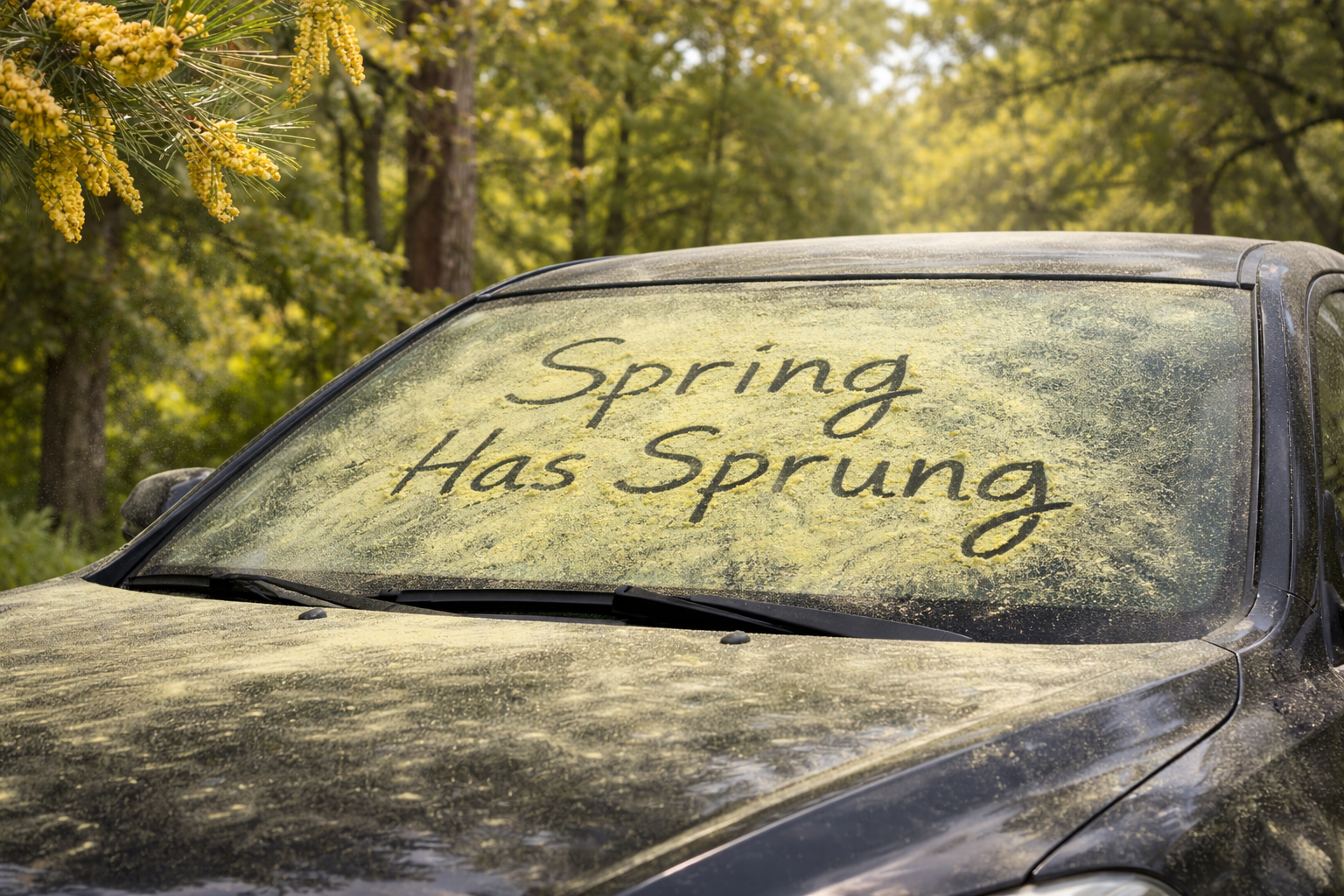
If you’ve noticed a yellow or green layer covering your car, sidewalks, patio furniture, or outdoor surfaces lately, you’re not imagining it. Each spring across Southeast Texas, pollen levels increase significantly as trees release microscopic particles into the air as part of their natural reproductive cycle.
For many residents in Beaumont and throughout Southeast Texas, this seasonal change can bring uncomfortable allergy symptoms. Sneezing, congestion, itchy eyes, and sinus pressure are common during peak pollen months, and some people also experience fatigue or headaches.
While seasonal allergies affect millions of people every year, understanding what causes spring pollen, how it affects the body, and when symptoms may require medical care can help people manage this time of year more comfortably.
Why Is There Yellow Dust on My Car?
Many people across Southeast Texas notice the same thing every spring — a yellow layer covering cars, sidewalks, patio furniture, and outdoor surfaces.
This yellow dust is tree pollen. Pine trees in particular release large amounts of pollen that become visible when they settle on surfaces. While the yellow pollen may look dramatic, it’s part of a natural seasonal cycle as trees reproduce.
Oak, pine, and other tree pollens circulate through the air during the spring months, which is why people often notice an increase in allergy symptoms around the same time the yellow dust appears.
Even individuals who do not normally experience allergies may notice mild irritation of the eyes, nose, or throat during periods of high pollen levels.
Why Spring Pollen Is So Noticeable in Southeast Texas
Southeast Texas has a climate that supports abundant tree growth. As temperatures warm and daylight hours increase in late winter and early spring, trees begin releasing pollen into the air.
Some of the most common pollen-producing trees in the region include:
- Oak trees
- Pine trees
- Cedar trees
- Elm trees
- Ash trees
Pine pollen is responsible for the visible yellow dust that often coats cars and outdoor surfaces. However, oak pollen is one of the most common triggers of seasonal allergy symptoms in Southeast Texas.
Because pollen is carried by the wind, these tiny particles can travel long distances and spread throughout the region, making it difficult to completely avoid exposure.
Common Spring Allergy Symptoms
For people with seasonal allergies, pollen exposure triggers an immune response. The body identifies pollen as a foreign substance and releases chemicals such as histamine.
This reaction leads to many of the familiar allergy symptoms people experience during the spring.
Common symptoms include:
• Sneezing
• Runny or congested noseAlthough seasonal allergies are common, symptoms can sometimes lead to additional health problems.
Sinus Infections
Persistent congestion can block sinus passages and allow bacteria to grow, potentially leading to sinus infections that cause facial pressure, headaches, and fever.
Asthma Flare-Ups
For individuals with asthma, pollen exposure may trigger breathing difficulties or worsen respiratory symptoms.
Severe Sinus Pressure
Inflammation in the sinus passages can lead to headaches, facial tenderness, and pressure around the eyes. If symptoms worsen or persist, medical evaluation may be necessary.
How to Reduce Pollen Exposure
While pollen cannot be eliminated during peak season, several simple steps may help reduce exposure and manage symptoms. Helpful strategies include:
Check Local Pollen Counts
Weather services and health websites often report daily pollen levels. Limiting outdoor activity on high pollen days may help reduce symptoms.
Shower After Outdoor Activities
Pollen can cling to hair, skin, and clothing. Showering and changing clothes after spending time outside can prevent pollen from spreading indoors.
Keep Windows Closed
Using air conditioning instead of opening windows helps limit pollen entering the home.
Use High-Quality Air Filters
HVAC filters and air purifiers can help reduce airborne allergens indoors.
Consider Over-the-Counter Allergy Medications
Antihistamines, nasal sprays, and other medications can help manage symptoms during peak pollen periods.
When Allergy Symptoms May Need Medical Attention
Fortunately, several simple habits can help restore healthy sleep routines after seasonal disruptions.
Most seasonal allergy symptoms can be managed at home. However, certain symptoms may indicate a more serious condition.
Medical evaluation may be needed if you experience:
- Severe sinus pain
- High fever with congestion
- Difficulty breathing or wheezing
- Symptoms that do not improve with allergy medications
- Persistent facial pressure or swelling
Seasonal allergies occur when the immune system reacts to airborne allergens such as pollen. According to the Cleveland Clinic, this reaction can trigger symptoms such as sneezing, congestion, itchy eyes, and sinus pressure. These symptoms may indicate a sinus infection, respiratory illness, or other medical conditions that require professional care.
When Sleep Disruptions May Need Medical Attention
Occasional sleep disturbances are common during seasonal transitions. However, persistent sleep problems may require medical evaluation.
You should consider seeking medical care if sleep issues include:
- Ongoing insomnia lasting several weeks
- Severe daytime fatigue
- Difficulty breathing during sleep
- Loud snoring or interrupted breathing
- Sleep problems affecting daily functioning
These symptoms may indicate sleep disorders or other health conditions that benefit from professional evaluation.
Emergency Care for Severe Respiratory Symptoms
In some situations, allergic reactions or respiratory symptoms may require urgent medical attention. People with asthma may experience worsening respiratory symptoms during high pollen periods. The CDC notes that environmental allergens such as pollen are common triggers for asthma symptoms.
Beaumont Emergency Hospital provides 24-hour emergency care for patients experiencing severe respiratory symptoms, allergic reactions, or other urgent medical concerns.
Our board-certified emergency physicians and experienced clinical team are available around the clock to evaluate symptoms, perform diagnostic testing, and provide treatment when needed.
When breathing becomes difficult or symptoms become severe, seeking timely care can help ensure the best possible outcome.
Emergency Care When Symptoms Become Severe
In rare cases, severe fatigue, breathing problems during sleep, or sudden health symptoms may require medical evaluation.
Beaumont Emergency Hospital provides 24-hour emergency care for patients experiencing serious symptoms or urgent medical concerns.
Our experienced emergency physicians and clinical team are available around the clock to evaluate symptoms and provide treatment when needed. When serious health concerns arise, access to prompt medical care can help ensure the best possible outcome.
Frequently Asked Questions About Sleep Changes in Spring
As pollen levels rise each spring across Southeast Texas, many people have questions about what they are seeing and how it may affect their health. The answers below address some of the most common concerns during allergy season and can help you better understand what your body may be experiencing.
Daylight saving time shifts the body’s internal clock by changing the timing of daylight exposure. This can disrupt circadian rhythms and temporarily affect sleep patterns.
How long does it take to adjust to the time change?
Most people adjust within a few days, but some individuals may take several weeks to fully adapt to the new schedule.
Why do I feel more tired in the spring?
Changes in daylight, busy schedules, and irregular sleep routines can contribute to fatigue during the spring months.
Can travel during spring break affect sleep?
Yes. Travel, schedule changes, and different sleeping environments can disrupt sleep patterns temporarily.
How can I improve my sleep routine?
Maintaining a consistent sleep schedule, limiting evening screen time, getting morning sunlight, and staying physically active can all help support healthier sleep patterns.
Supporting Your Health During Allergy Season
Spring in Southeast Texas brings noticeable environmental changes, and for many people, that includes increased exposure to pollen. While seasonal allergies are common, symptoms can vary from mild irritation to more persistent discomfort that affects daily life.
Paying attention to how your body responds during peak pollen season can help you manage symptoms more effectively and recognize when additional care may be needed.
Beaumont Emergency Hospital is here to support the health of our community, providing care when more serious symptoms or concerns arise.